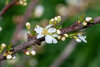
‘Jade Parade’ western sandcherry in bloom in eastern Nebraska, April 2026
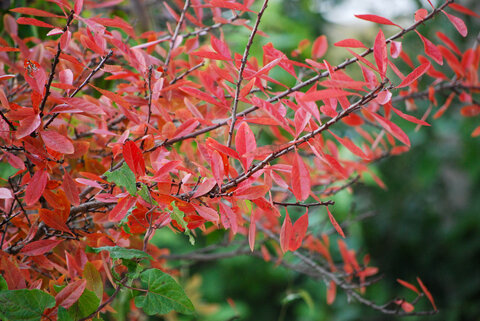
Western Sandcherry (Prunus besseyi) displaying its vibrant red autumn color at the Kimmel Education and Research Center in Nebraska City, Nebraska on October 29th, 2025.
Western sandcherry (Prunus besseyi) is a hardy, adaptable deciduous shrub native to the Great Plains, making it well-suited for Nebraska landscapes and restoration plantings. In early spring, it produces small, white, five-petaled flowers that line the stems and provide an early nectar source for pollinators. These blooms are followed by dark purple to black fruits in summer, which are valuable to birds and can also be used for jellies and preserves.
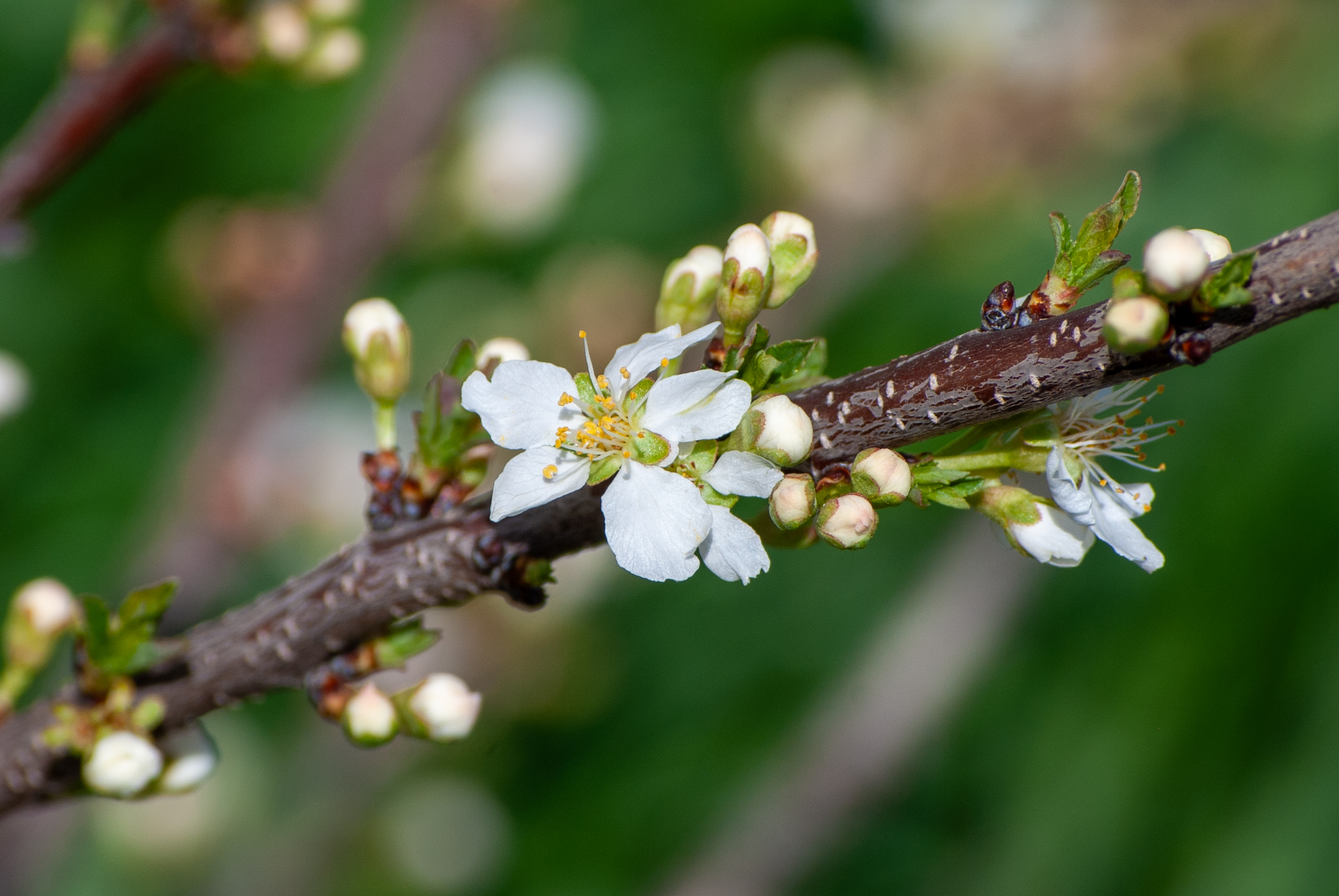
‘Jade Parade’
‘Jade Parade’ is a low-growing, spreading selection of western sandcherry valued for its dense, ground-hugging habit and ornamental appeal. It typically grows shorter than the species, making it well-suited for use as a groundcover, along slopes, or in mass plantings. In spring, it produces abundant white flowers, followed by small, dark fruits that attract wildlife.