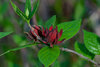
Sweetshrub (Calycanthus floridus) just after bloom on UNL’s East Campus, April 29, 2026
Sweetshrub (Calycanthus floridus) is a deciduous shrub valued for its unique, fragrant flowers and adaptability to a range of landscape conditions. In late spring, it produces distinctive, reddish-brown flowers with a spicy, fruity fragrance often compared to strawberries or pineapple. These unusual blooms stand out against the plant’s broad, lush green foliage, adding both visual and sensory interest to the landscape. Sweetshrub performs best in full sun to partial shade with moist, well-drained soils, though it is adaptable to heavier soils, including clay.
‘Aphrodite’
‘Aphrodite’ is a hybrid selection known for its larger, more vibrant reddish-purple flowers and extended bloom period. It offers improved ornamental appeal while maintaining the fragrance and adaptability of the species.
‘Michael Lindsey’
‘Michael Lindsey’ is a more compact, upright selection with glossy foliage and improved cold hardiness. It produces fragrant maroon flowers and offers excellent yellow fall color, making it well-suited for smaller landscapes.