‘Apricot Jewel’ species tulip (Tulipa batalinii) in full bloom in the Backyard Farmer Garden, April 2026.
Species tulip (Tulipa batalinii) is a compact, drought-tolerant bulb prized for its refined form and reliability compared to many hybrid tulips. Native to Central Asia, it is well adapted to dry, well-drained soils and performs best in full sun. In early to mid-spring, it produces delicate, star-shaped flowers in warm tones of apricot, yellow, or orange that open wide in sunlight. Unlike many traditional tulips, species tulips tend to be longer-lived and may naturalize over time when planted in suitable conditions.
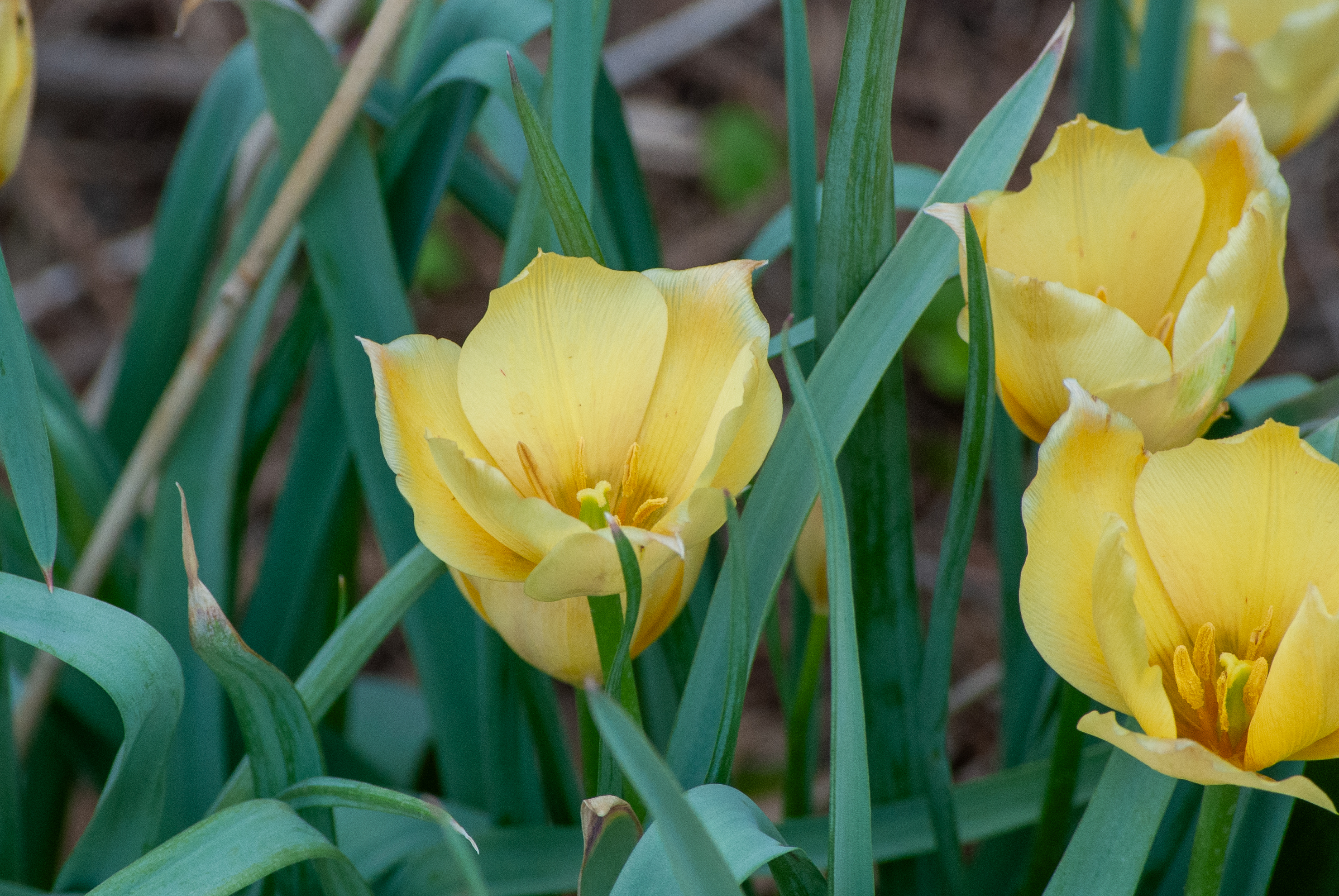
‘Apricot Jewel’
‘Apricot Jewel’ is a standout selection of Tulipa batalinii known for its soft apricot to peach-colored blooms that gently fade to creamy yellow as they mature. Its low, compact habit and graceful, star-shaped flowers make it especially effective in rock gardens, containers, and naturalized plantings. This cultivar maintains the species’ excellent drought tolerance and reliability, offering a refined and long-lasting spring display.