common name:
Prairie Willow
|
scientific name:
Salix
humilis
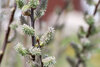
Prairie willow (Salix humilis) produces soft, silvery-green catkins in early spring, providing an important early-season resource for pollinators. Photo taken March 31, 2026 in the Backyard Farmer Garden.
Image Creadit:
Trey Lamkins, Graduate Research Assistant
Prairie willow (Salix humilis) is a native deciduous shrub commonly found in prairies, open woodlands, and along streambanks throughout the central United States. In early spring, it produces soft, silvery catkins that mature into yellow, pollen-rich structures, providing a critical early-season food source for pollinators. This species typically forms a multi-stemmed shrub with narrow, gray-green leaves that give it a fine-textured appearance in the landscape.
Charecteristics
Plant type:
Deciduous shrub
Hardiness Zones:
3, 4b, 5a, 5b, 6a, 7
Light Needs:
Full Sun
Water Needs:
Moist
Space Requirements:
6 -12 feet
Height Requirements:
6– 0 feet
Spread Requirements:
5–8 feet
Maintenance Requirements:
Low
Bloom Color:
White
Bloom Time:
Spring
Leaf Color:
Green
Companion Plant Tolerance:
Wet Soil
Uses:
Naturalize
Varieties