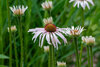
Pale Purple Coneflower (Echinacea pallida) is a graceful prairie wildflower recognized by its long, drooping lavender-pink petals and prominent central cone. It provides valuable nectar and pollen for a wide range of pollinators throughout the summer. Photo taken at the Kimmel Education and Research Center in Nebraska City, Nebraska.
Pale Purple Coneflower (Echinacea pallida) is a long-lived native prairie perennial found throughout much of the central United States, including Nebraska. It is distinguished from the more commonly planted Purple Coneflower (Echinacea purpurea) by its narrower leaves, taller stature, and long, gracefully drooping pale lavender-pink petals. Blooming from late spring into summer, its flowers provide nectar and pollen for native bees, butterflies, and other beneficial insects.