Blue Princess® Holly (Ilex × meserveae ‘Blue Princess’) in bloom, with clusters of small white flowers emerging among glossy blue-green foliage on UNL's East Campus in April 2026.
Meserve holly (Ilex × meserveae) is a group of cold-hardy hybrid hollies valued for their glossy blue-green foliage, improved winter tolerance, and reliable ornamental performance. Developed by crossing English holly (Ilex aquifolium) with hardier species, Meserve hollies combine classic evergreen texture with enhanced adaptability to colder climates. In spring, plants produce small, inconspicuous white flowers that develop into bright red berries on female cultivars when a compatible male pollinator is present.
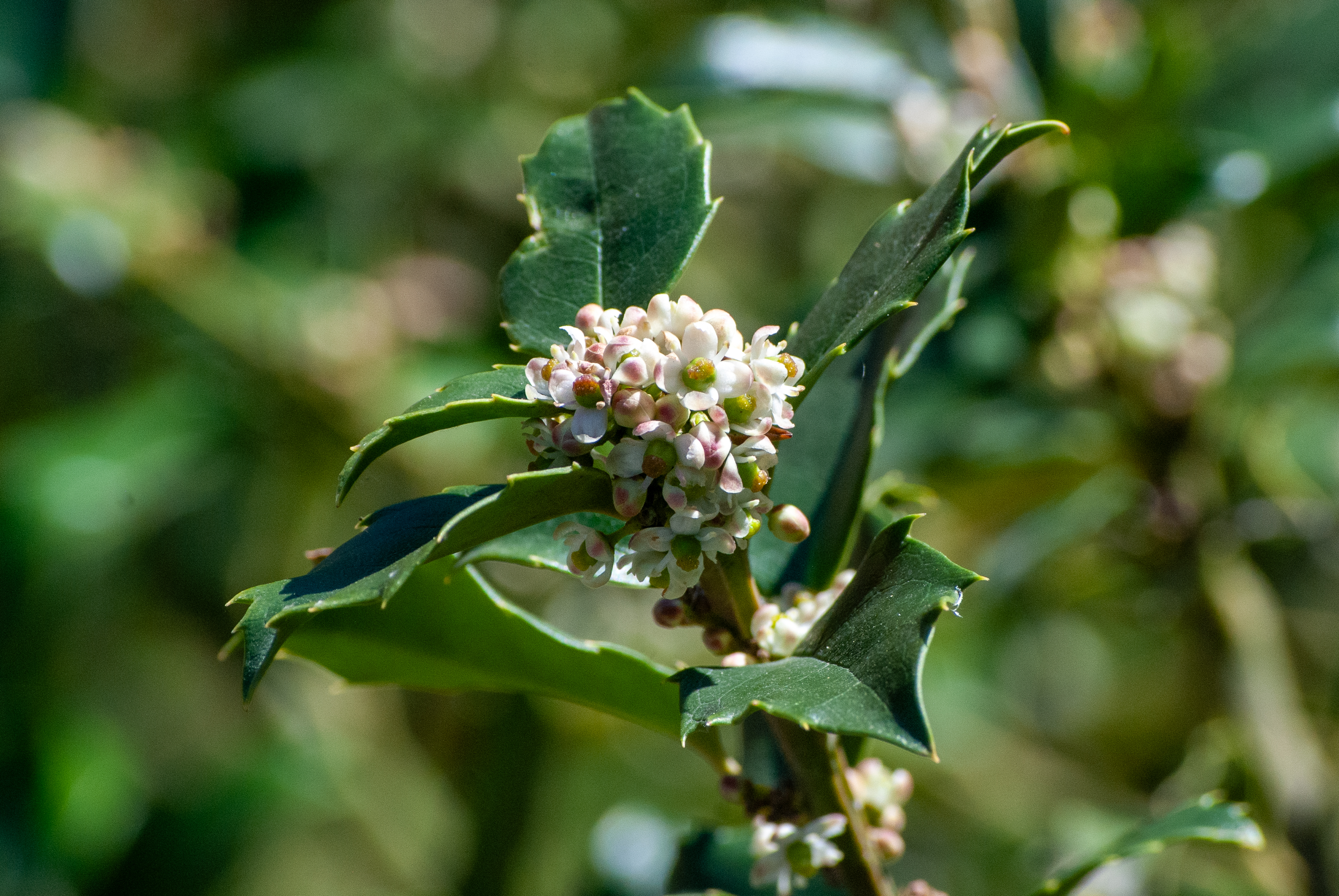
'Blue Princess'
‘Blue Princess’ is a widely used female cultivar known for its abundant bright red berries and rich blue-green foliage. It forms a dense, upright shrub and is highly valued for winter interest when paired with a compatible male pollinator such as ‘Blue Prince.’