‘Harry Lauder’s Walking Stick’ (Corylus avellana ‘Contorta’) in bloom, displaying pendulous golden catkins against its signature twisted branches in spring at the Backyard Farmer Garden, April 2026.
Common hazel (Corylus avellana) is a versatile deciduous shrub valued for both its ornamental qualities and edible nuts. In early spring, it produces long, pendulous yellow-brown catkins that release pollen before leaves emerge, adding subtle seasonal interest. While the species is often grown for nut production, ornamental cultivars such as ‘Contorta’ are prized for their unique architectural form. This cultivar features dramatically twisted and contorted branches that provide striking winter interest and are commonly used in floral arrangements.
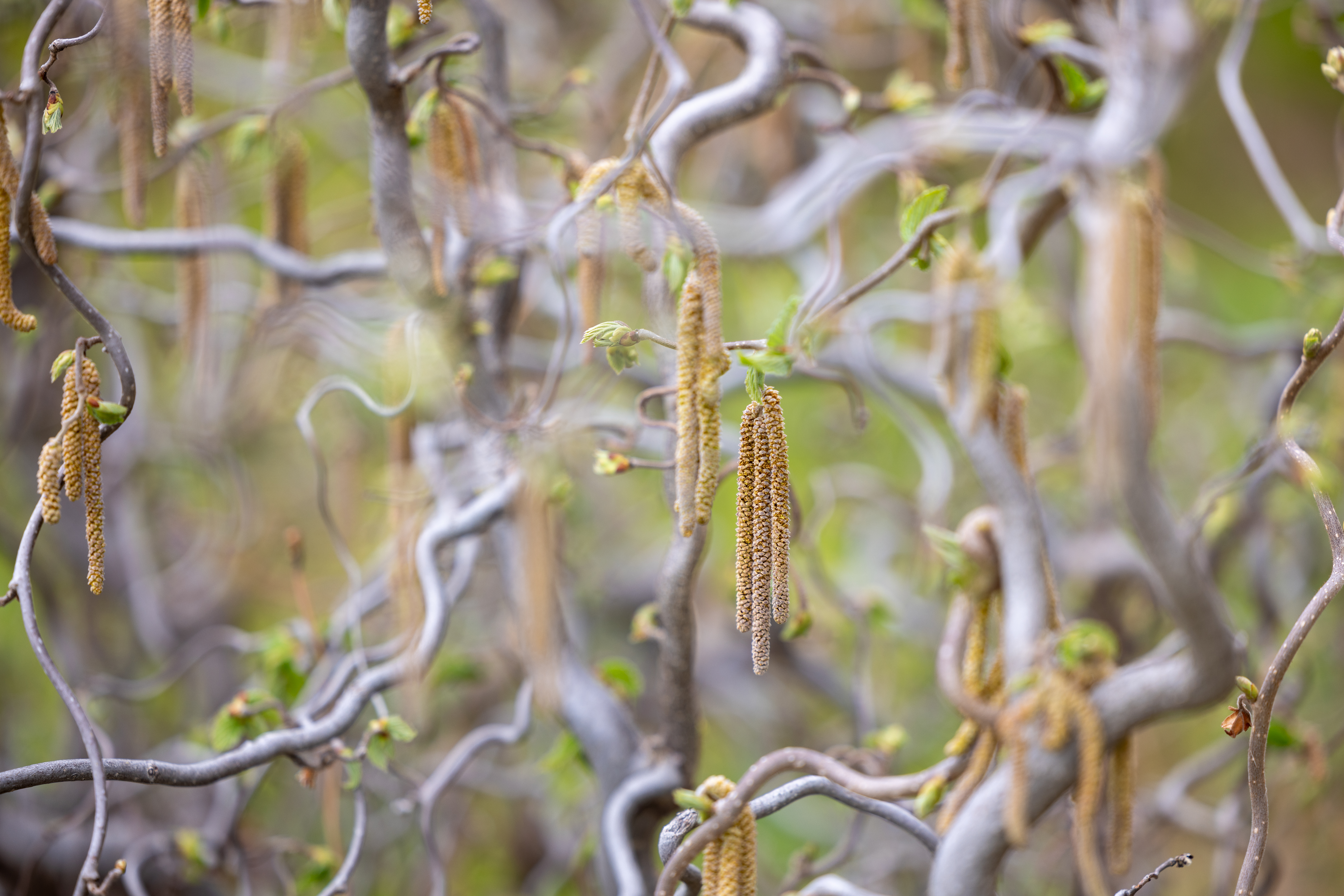
‘Contorta’ (Harry Lauder’s Walking Stick)
‘Contorta’ is a distinctive ornamental cultivar known for its dramatically twisted, corkscrew-like branches that create strong winter interest. In late winter to early spring, it produces elongated golden catkins that contrast beautifully against the contorted stems. This selection is primarily grown for its unique form rather than nut production and is commonly used as a specimen plant or in cut floral arrangements.