common name:
Chokecherry
|
scientific name:
Prunus
virginiana
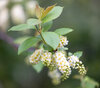
Chokecherry (Prunus virginiana) in bloom, showcasing its elongated clusters of white flowers in the Backyard Farmer Garden, April 12, 2026.
Image Creadit:
Trey Lamkins, Graduate Research Assistant
Chokecherry (Prunus virginiana) is a highly adaptable native small tree or large shrub commonly found throughout the Great Plains and widely used in conservation and ecological plantings. In spring, it produces elongated clusters of fragrant white flowers that provide an important early-season resource for pollinators. These blooms are followed by small, dark red to black fruits in mid to late summer, which are highly valued by birds and other wildlife. While the fruit is astringent when raw, it is commonly used in jellies, syrups, and wines after processing.
Charecteristics
Plant type:
Deciduous shrub
Hardiness Zones:
2, 3, 4b, 5a, 5b, 6a, 7
Light Needs:
Part Shade
Water Needs:
Moist
Space Requirements:
12-24 feet
Height Requirements:
10– 5 feet
Spread Requirements:
9–2 feet
Maintenance Requirements:
Low
Bloom Color:
White
Bloom Time:
Spring
Leaf Color:
Green
Wildlife Attraction:
Birds
Uses:
Naturalize
Varieties